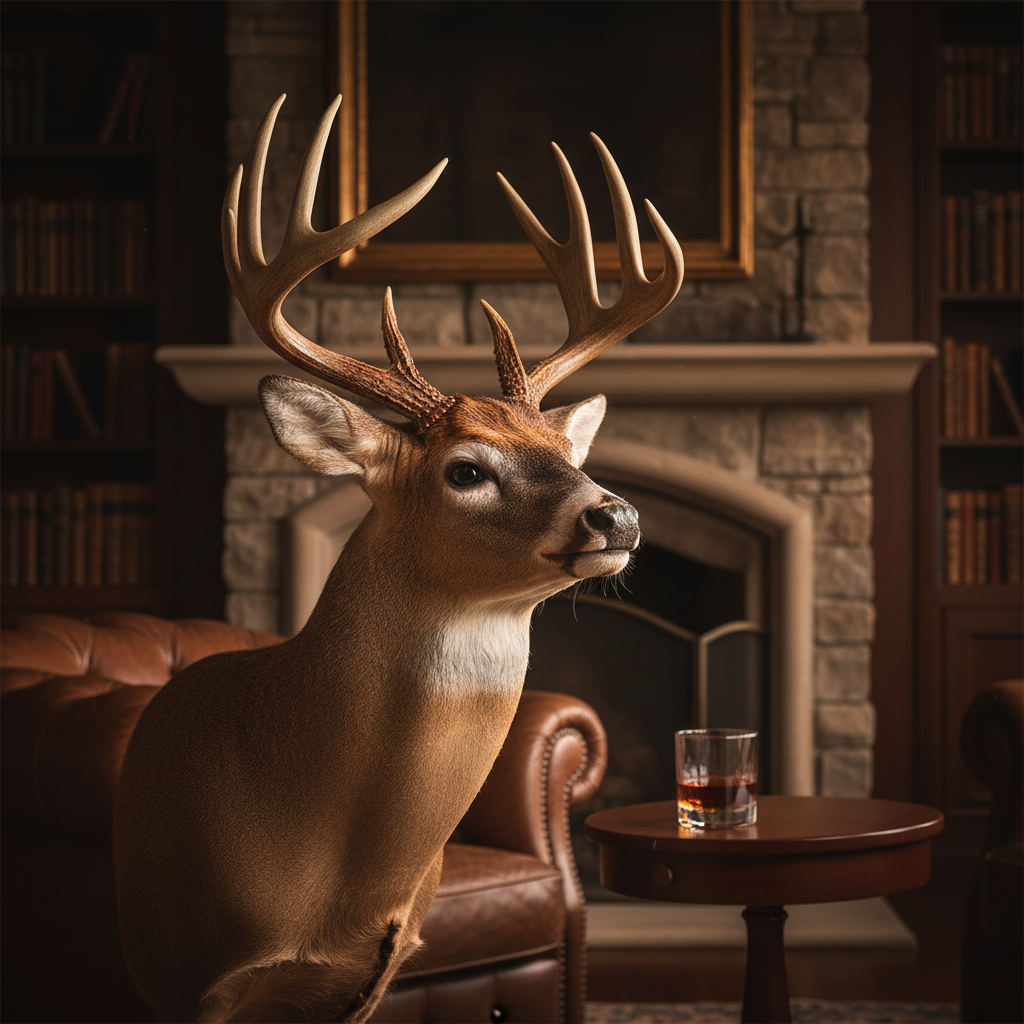
How to Remount Deer: Professional Taxidermy Restoration

How to Remount Deer: Professional Taxidermy Restoration
You remember exactly where you were when that buck stepped out of the morning fog in 1994, but today, that same trophy looks like it’s seen better days. It is a heartbreaking reality for many Kentucky hunters: the taxidermy restoration you’ve been putting off is no longer a luxury—it’s a necessity to save your history. Whether you are looking to remount deer from a decades-old hunt or you need to restore old mount pieces that have succumbed to the humidity of the Ohio River Valley, preserving your legacy is our obsession. At Bourbon & Buck, we can help with Wildlife Preservation and Antler Restoration that turns back the clock on your most prized Deer Taxidermy. You might be wondering, "How much does it cost to remount a deer head?" or searching for the best taxidermy restoration services in Louisville KY. Look no further. This is the definitive guide to giving your trophies a second life.
Most hunters don't realize that a mount has a shelf life, but with the right hands, that shelf life can be renewed for another fifty years. We don't just fix skins; we restore the spirit of the hunt. Let’s dive into why your trophy is fading and how we can bring it back to its original glory.
Is Your Trophy Fading? Why Taxidermy Restoration Matters Now
If you walk into your trophy room and find yourself squinting to remember the vibrancy of that buck’s summer coat, you are witnessing the silent decay of a memory. Taxidermy isn't just art; it’s a biological preservation that battles against light, heat, and time every single day. Taxidermy restoration matters now more than ever because we are currently seeing a 'Great Deterioration' of mounts from the 1980s and 90s, where tanning methods weren't as advanced as they are today.
At Bourbon & Buck, we use the Legacy Lifespan Framework to evaluate your pieces. This framework suggests that every 20 years, a mount undergoes significant structural changes. If you miss the window for restoration, the damage can become irreversible. Why wait until the skin is paper-thin and the ears are curling? Restoring your mount now ensures that the original integrity of the antlers and the unique facial structure of that specific deer are maintained before the form underneath begins to collapse.
Why 2026 is the turning point:
- Technological Advancements: New synthetic resins and museum-grade tanning oils allow us to achieve a level of realism that was impossible 25 years ago.
- Environmental Shifts: Increasing humidity levels in the Louisville area are accelerating the growth of mold and the breakdown of old glues.
- Value Retention: A well-restored mount keeps its sentimental and aesthetic value, whereas a decaying one becomes a liability for your home’s air quality and decor.
Don't let your hardest-earned trophy become a dusty relic. Restoration is an investment in the stories you’ll tell your grandkids when they finally ask about the 'one that didn't get away.'
Remount Deer: 5 Warning Signs Your Trophy Is Deteriorating
The moment you notice a small crack in the corner of a deer's eye, the clock is officially ticking on your ability to remount deer without losing significant detail. Deterioration is often stealthy, hiding in the shadows of your den until it’s almost too late. We’ve identified five critical warning signs that every Louisville hunter needs to watch for to ensure their Wildlife Preservation efforts aren't in vain.
1. The 'Sawdust' Effect (Dermestid Infestation): If you see a fine, light-colored powder on the floor beneath your mount or on the brisket, you have visitors. These are dermestid beetles, and they are eating the protein out of the hide and the remaining flesh on the skull. This is a 911 emergency for taxidermy.
2. The 'Glass Eye Gap': Look closely at the eyes. Is the skin pulling away from the glass? This is a sign of 'drumming' or hide shrinkage. As the skin loses moisture, it retreats, creating an unnatural, bug-eyed look that ruins the realism of the piece.
3. Ear Curling and Cracking: The cartilage in the ears is often the first thing to fail. If the edges are starting to look like burnt parchment or are curling inward, the oils in the hide have completely dried out. Antler restoration can't fix a deer that has lost its ears.
4. Hair Slip (The 'Bald Patch' Test): Gently tug on a small patch of hair on the neck. If it comes out easily in your fingers, you have hair slip. This is usually caused by poor initial tanning or internal rot, and it means the mount needs an immediate remount deer procedure with a new cape.
5. Discolored Antlers: Are the antlers looking chalky or white? UV damage strips the natural oils and pigments from the bone. While the hide is the soul, the antlers are the crown; once they begin to chalk, they become brittle and prone to snapping.
Preserve Heritage: How to Restore Old Mounts for Your Family
Imagine your great-grandson sitting in your favorite chair forty years from now, looking up at the buck you took on that freezing November morning in the Bluegrass State. That mount is more than a piece of decor; it’s a physical bridge between generations. When you choose to restore old mount pieces, you aren't just cleaning a deer—you are preserving a family heirloom. We believe that every trophy has a soul, and that soul is tied to the man who took the shot.
We often see men in their 60s and 70s bring in their father’s mounts. They don't want a 'new' deer; they want that deer. They want the one that hung in the cabin where they learned to hunt. This is where preserve heritage becomes our guiding principle. We take the time to document the original features, the specific 'look' of the deer, and even the original wooden plaque if it holds sentimental value.
"A trophy is the only piece of art where the artist and the subject shared a moment of profound respect in the wild. Restoring it is an act of honor."
The process involves deep-cleaning the hair to remove decades of tobacco smoke, woodstove soot, and dust, followed by a specialized re-hydration process. We treat Deer Taxidermy restoration as a curated historical project. We aren't just taxidermists; we are curators of your hunting legacy. By investing in professional restoration, you ensure that the story of the hunt doesn't fade into a blurry memory, but remains a vivid, tactile part of your family's history.
The Truth About Remounting: Can a Cracked Cape Be Saved?
One question we get often at Bourbon & Buck is: "Can you fix this skin, or do I need a whole new deer?" The truth is often a hard pill to swallow: once a cape has reached a certain level of 'dry rot,' it becomes like wet tissue paper—impossible to sew and even harder to stretch. However, taxidermy restoration has come a long way, and we have proprietary techniques that can save pieces most shops would throw in the dumpster.
If the cracks are localized—say, around the nose or the tear ducts—we can often use museum-grade epoxies and specialized hide fillers to reconstruct the area. We then use airbrushing techniques to match the hair color and skin texture perfectly. But if the entire neck is split or the hide is 'drumming' (pulling away from the form) across the whole body, a full remount deer is the only ethical and professional solution. This involves taking your original antlers and placing them on a brand-new, high-quality cape that matches the size and season of your original harvest.
How To Repair Dry Rot and Hair Slip
Dry rot occurs when the chemical bonds in the leather break down. To combat this, use a Re-Liquefication Protocol. Slowly introduce specialized oils back into the hide over several days. If we are dealing with hair slip, we use a localized 'pinning' technique and waterproof adhesives to lock the remaining follicles into place. For Louisville hunters, this means we can often save a mount that has been sitting in a humid garage for five years, provided the damage hasn't hit the 'point of no return' (which we define as more than 30% hair loss).
Taxidermy Restoration: 3 Secrets to a Life-Like Finish
The difference between a 'stuffed deer' and a 'living monument' lies in the details that 99% of taxidermists overlook. When you are looking for the best taxidermy restoration services in Louisville KY, you aren't just paying for labor; you’re paying for the secrets that create a life-like finish. At Bourbon & Buck, we have three non-negotiable secrets that define our taxidermy restoration process.
Secret #1: The 'Wet Look' Mucosa. Most old mounts have dry, painted-looking noses and eyes. We use a multi-layered gloss resin technique to simulate the natural moisture found in a living deer’s nostrils and tear ducts. This creates an 'optical illusion' of life that draws the viewer in from across the room.
Secret #2: Anatomical Muscle Mapping. Old forms were often just generic shapes. When we restore old mount pieces, we often modify the underlying foam to reflect the actual musculature of a rutting buck. We add the swelling in the neck and the tension in the jaw that was missing from the original 1970s-style mount. This gives the deer a 'posture' that commands respect.
Secret #3: Custom Color Blending. A deer's face isn't just brown. It’s a tapestry of greys, tans, blacks, and even subtle blues around the eyes. We use high-end airbrushing with transparent pigments—not opaque paints—to layer the color back onto the skin. This allows the natural 'grain' of the hair to show through, preventing that 'spray-painted' look that ruins so many amateur restorations.
By focusing on these three pillars, we ensure your Deer Taxidermy doesn't just look 'fixed'—it looks like it just stepped out of the woods and onto your wall.
Restore Old Mounts: Why Louisville Hunters Trust Bourbon & Buck
Louisville isn't just a city; it’s the gateway to some of the finest deer hunting in the country. From the rolling hills of the Knobs to the thickets of the Jefferson County suburbs, our local hunters know quality when they see it. When people search for Best taxidermy restoration services in Louisville KY, they find Bourbon & Buck because we understand the specific challenges of our climate and our culture.
We are part of this community. We know the local taxidermy history—we know the styles of the shops that were popular in the 80s, and we know how to fix the specific mistakes those old-school methods often produced. Whether you took your buck in the Bernheim Forest area or brought it back from a trip to Western KY, we treat your trophy with the respect a local legend deserves. We aren't a high-volume 'factory' shop. We are a studio partner where every taxidermy restoration is handled by a master craftsman who probably hunts the same ridges you do.
What Most Get Wrong: The Cost vs. Value of a Professional Save
Let’s talk turkey—or in this case, big bucks. How much does it cost to remount a deer head? This is the question that stops many hunters in their tracks. Most people see the price tag of a professional restoration or remount and compare it to the cost of a new mount today. But that is the wrong math. You aren't paying for a 'new deer'; you are paying to rescue a memory that is currently evaporating.
According to our 2025 Trophy Value Index, the cost of a professional remount is typically 20-30% higher than a standard new mount. Why? Because it requires twice the labor. We have to carefully deconstruct the old mount, salvage the antlers without damaging the skull plate, prep the new cape, and often custom-sculpt a form to fit antlers that were never meant for modern foam. It is a surgical procedure, not just a craft project. What most get wrong is thinking they can 'save money' by going to a hobbyist. A bad restoration is worse than no restoration—it can permanently ruin the antlers and the skin beyond any hope of a future fix.
The ROI of a Professional Save:
- Generational Value: You are securing a piece of your history for the next 50 years.
- Aesthetic Impact: A high-end restoration becomes the centerpiece of a room, not an eyesore you have to apologize for.
- Peace of Mind: Our museum-grade processes mean you won't be dealing with bugs or rot again in five years.
At Bourbon & Buck, we don't just restore old mounts; we provide a finish that is often better than the day the deer was first harvested. If you're ready to stop watching your trophies fade and start seeing them as the vibrant icons they were meant to be, let's talk. Your legacy is too important to leave to chance.
Bird Taxidermy: The Definitive Small Game Mount Guide

Taxidermy Turnaround: Why Honest Craftsmanship Takes Time